
A few weeks ago an eight year old 80″ Sharp Aquos TV set turned on then within seconds went dark. And it didn’t come back. In fact, the tiny LED lamp in the bottom center of the case was also dark. This could only mean that the power supply board was not working. A few days before a lightning strike made a very loud boom nearby. I’m guessing the failure was related to that event.
Modern flat screen TVs are quite modular. Generally there is one TV board that contains the tuner and inputs with processing, a backlight controller for the LED lamps, and another board that controls the LCD panel for the display. Working together, these 3 boards comprise 90% of the electronics (some TV’s have other smaller boards for special functions).
To keep a modern LCD TV working, the power supply board actually stays on all the time, providing a “keep alive” voltage – generally 5 volts – to the processor on the TV board. That way when you press the power button on the IR remote control, there is a subset of the electronics that responds to the command. This usually means a signal is sent to the power board to “light up” all of the rest of the voltages needed to run the set.
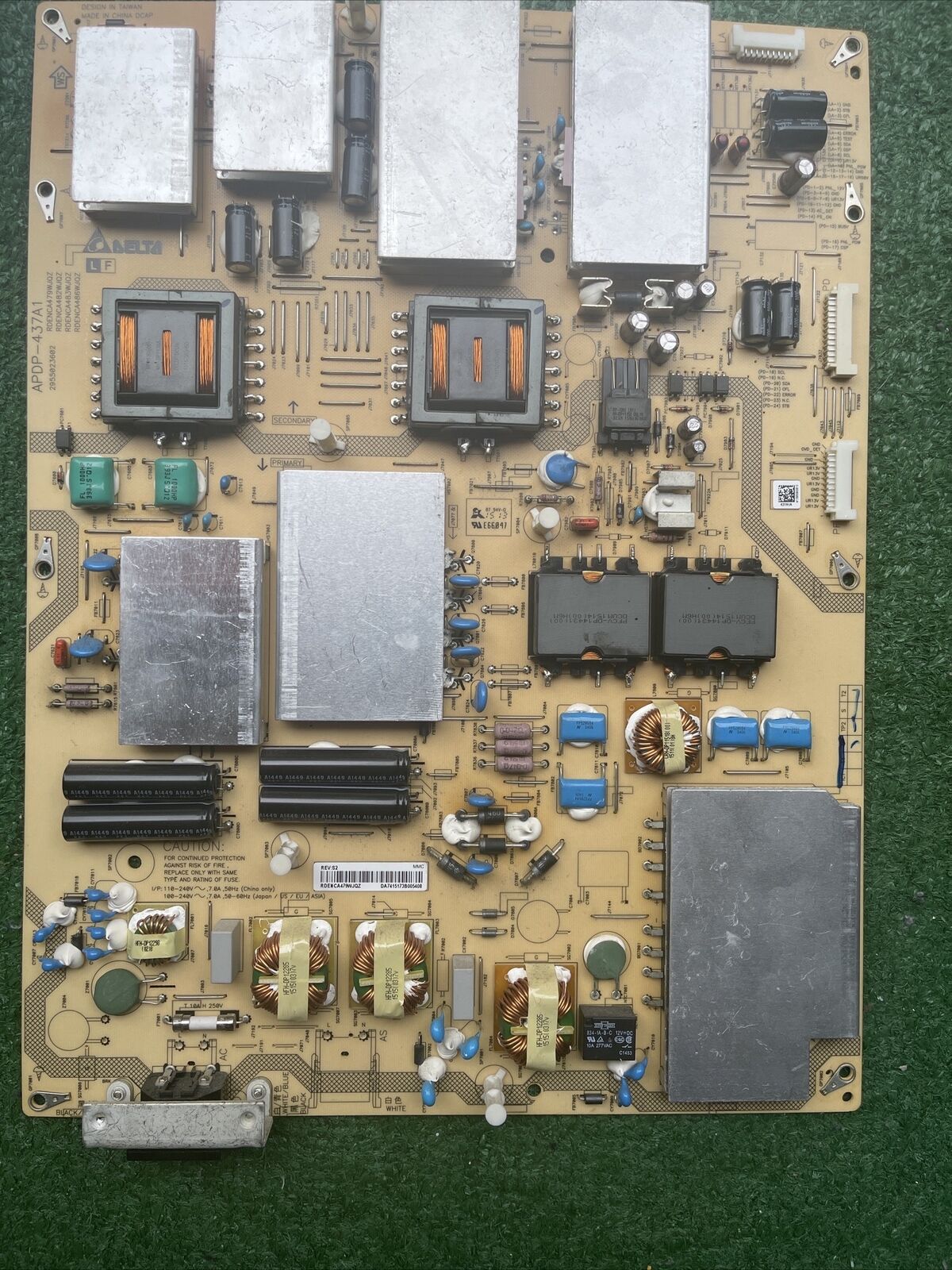
Now it would be nice if sets had schematics and / or block diagrams inside the case. I remember the days of such documentation included in the back of major appliances. But no more. And with the modularity of TV electronics, replacing boards is about all a current TV dealer can do, often resorting to third-party sources, like eBay to obtain them. This appeared to be my fate in repairing this 80″ Sharp, but alas, no power supply board was to be found on eBay or other parts sites that dealt in these units. And of course, the manufacturer, Sharp in this case, will not even sell you the parts or any diagnostic diagrams. That is for an authorized dealer. But what if the authorized dealer can’t order parts either? Well, they are no more able than someone searching on the sites I did.
Realize the original price for this 80″ set was over $2000. Consigning it to a landfill seemed to be a huge waste. It was working well before the failure. What to do??
Almost every power supply in use today is a switched-mode design. The input line voltage is rectified, then fed to a high-frequency oscillator and using ferrite transformers. This AC output is then rectified, cleaned up and regulated to the DC voltages needed. This design removes the need for heavy iron transformers with higher losses to do the same AC to DC conversion but at 60Hz line frequency.
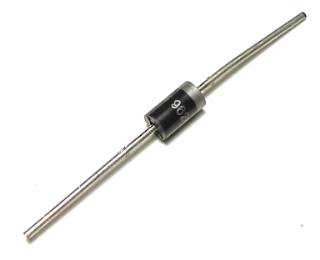
The primary side was working – the high voltage DC was there. But in the secondary side a key component, a 100V 5A diode, was shorted out. This diode is the one that creates the 5V keep alive DC voltage, and twenty cents later and a bit of soldering, the entire power supply was working. The diode? A BR5100 Schottky high-speed power diode, widely available.
So 10 hours later of diagnostic time (I’m ashamed I didn’t find it faster) all back to normal. And a spot in a landfill saved at least for the present!
 Renaissance Engineer
You must be logged in to post a comment.