
Tags
“If you know the enemy and know yourself, you need not fear the result of a hundred battles. If you know yourself but not the enemy, for every victory gained you will also suffer a defeat. If you know neither the enemy nor yourself, you will succumb in every battle.”
― Sun Tzu, The Art of War
In what might appear to be a radical departure from past posts, stick with me! This one is more of an expose on the democratization of publishing books. This is because technology has made the business of word smithing to self-published pulp fiction a fully direct process without the limits of a professional experienced editorial team, agent, or sales force.
Back in the “good old days” before the likes of Amazon KDP (Kindle Direct Publishing) if you wanted to publish a book, you basically could go two routes – shop your manuscript or book concept around to publishing houses and see if anyone would take it for their catalog. As an unknown, the hope of a nice “advance” or publishing contract was your reward. If not, there was always the manual self-publish approach. This required finding an affordable production shop that could work with you. The main barrier here was money. If your book was text only then that placed your work at a much less expensive price per copy than any color process. And if your book was filled with color illustrations and photographs like a travel guide, then the cost of production (and often the minimum order!) would rise. You would need to do whatever minimum run the print shop required because the presses and binding machines needed enough copies to make it profitable for the printing company.
And this required usually a not too small sum for those first run copies! Wow, you’re now a “published” author. But being independent, it was up to you for placement and sales. You would not have the marketing resources nor automatic placements in major bookstores, nor the inside experience of people whose livelihood was built on the success of authors and book sales.
In other words, it was a brutally challenging system unless your market was already in place. Like the college professor who writes the book for their class, updates it and makes sure next year’s edition requires the purchase of new copies to match! But fast forward to today. What has changed?
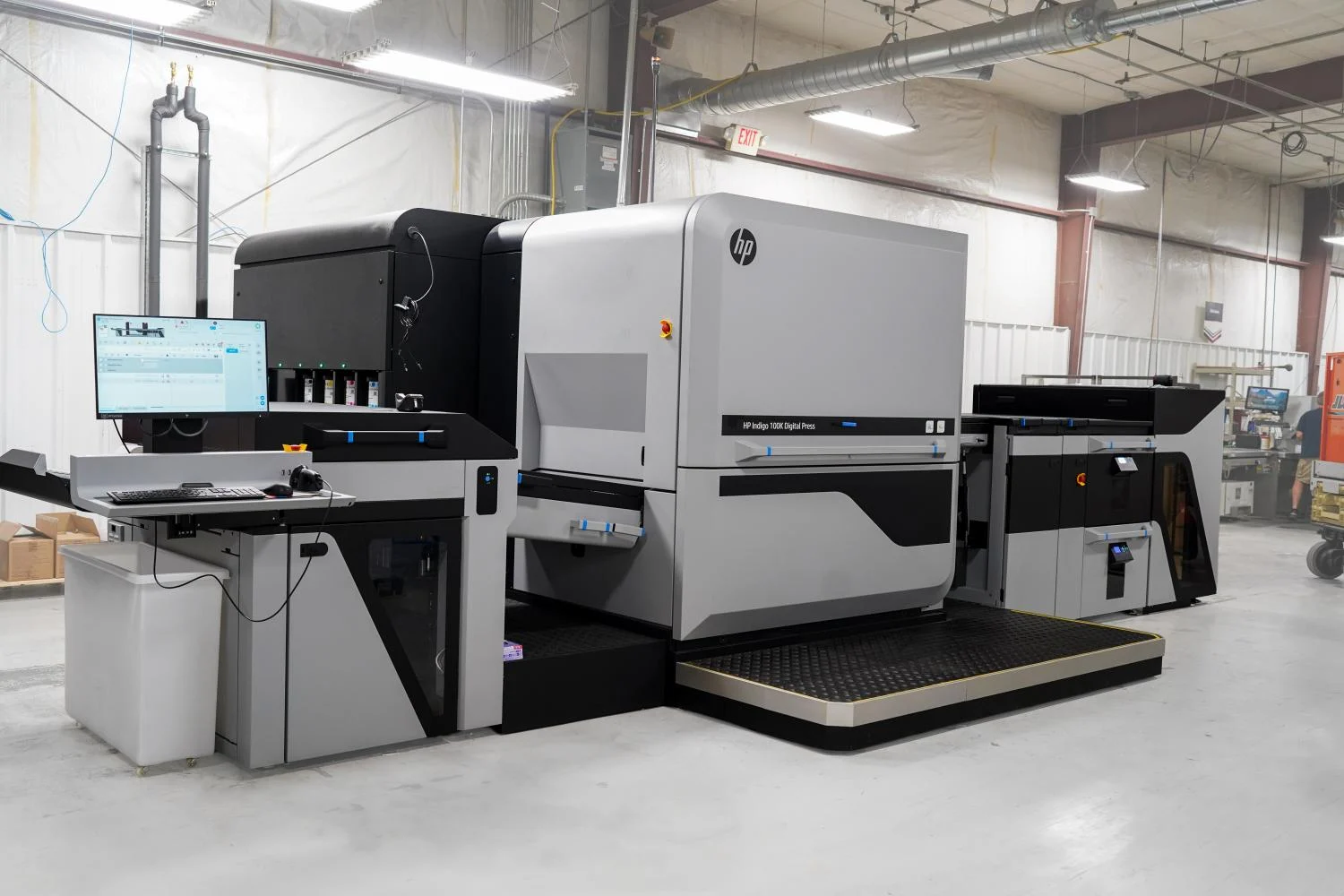
A huge change has come in printing press technology. This blog has covered a lot of things that have been (and continue to be) disruptive forces on manufacturing – specifically additive manufacturing. The technological advances of “3D printing” have enabled even a 6 year old to produce plastic parts on demand from an inexpensive spool of filament. Did a similar approach to technology change the printing press? Unknown to most folks, indeed it has.
High speed digital book presses are how things are done these days. Print on demand used to be the domain of copy shops, but now complete books (especially paperbacks) can be made on demand for mass production and at rather amazing prices. The overhead of earlier printing technology has been reduced to the point that the equipment is more like a copier than a printing press. Dry inks, much the same as in a laser printer, speed the process. But on top of the ability to print books directly, a digital press has something else important to offer.
“Digital presses are essentially huge production machines capable of churning out massive volumes of prints with impressive quality. Unlike their non-digital counterparts, what truly sets digital presses apart is their speed. The lack of set-up time means that you can do multiple print jobs back-to-back faster than you could on an offset or analog press. Plus, most digital presses use dry ink or toner, both of which require a lot less drying time than regular ink.” (https://www.stptexas.com/blog/what-are-digital-presses)
Example: I recently published a 100 page 8.5 x 6″ full color book at the highest quality possible from Amazon KDP. A single copy at the first tier quantity price is $8.65. Made on demand in one copy or a thousand – no minimum order. Maybe it is hard for you to appreciate that, but considering my order quantity was a dozen books, that is astounding compared to the times of the offset press. The delivery time? Two weeks! Yes offset presses are still being used (especially for higher quantities like a magazine) but I could never justify an offset production of my book in such limited quantities.
Now one side effect of this is the field of potential published authors has expanded exponentially. Anyone with a word processor can write and publish a book. No experience or up-front capital needed and no real writing talent required, although I would agree that quality still sells and is important for a book to succeed. But self-publishing no longer has the time and expense barriers that existed in pre-digital press days.
So hold that thought for a moment. Lets consider a pyramidal economic model. This is not a fancy end of life thing for an ageing pharaoh… (forgive the pun) but rather an economic system in the shape of a pyramid. Perhaps the phrase “pyramid scheme” comes to mind? That can be something illegal but there are plenty of legal pyramid schemes both obvious and more hidden.
Many years ago I was invited to lunch by a new college colleague. The invitation was urgent – “I really need to talk to you about something that could change your life!” Was this a religious message from a devoted Christian who was not certain of my salvation? But a free lunch (at the college cafeteria at faculty discount rates) was not something to dismiss. We set up a time to get lunch and on the appointed day we met at the central cafeteria. Finally sitting down at the table, I almost expected him to open the time with a prayer, but no – he went right to the “pitch.”
And what was this life changing message? I could break out of the low wages of a college professor by becoming one of his Amway sales consultants! Sure, sell Amway and your life will never be the same! Cases of motor oil, laundry detergent, etc. – the things everybody wants (yet not at Amway prices of course – the local grocery and auto stores were cheaper!). You see I already heard the “pitch” from my wife’s oldest sister – who sold Amway – and we already knew the outcome was poor. Amazon Prime I believe was part of its decline, not to mention numerous lawsuits and criminal business investigations.
Why was Amway a “pyramidal economic scheme?” Another name for this system (likely to avoid any connection to the former name) is Multi Level Marketing.
These systems generally work like this. You start out at the lowest level. You build your sales and sales force to increase your flow of goods and returns. By adding to your “network” eventually your income is a take from what would be their profits, and so forth, until the lion’s share was made at the corporate level. Thus like a pyramid, there are many at the “bottom” supporting the levels above (with likely the least return on a sale and who also have the most direct support to the customers). The higher you go, those who earn the most are the levels fed from the ones below. Who at some point may not even be selling anything! Often working with the cultural idea of the American dream, the promise of independent wealth lies ahead!
Many people who join MLM companies are not able to make a profit, and the vast majority of people who join these companies will not earn enough money to make it worth their time and effort. In fact, The Federal Trade Commission (FTC) reported 99% of people who participate in MLM lose money. In a legitimate direct sales or network marketing company, the focus is on selling a product or service to customers. However, in an MLM company, the focus is often on recruiting new members, who then recruit more members, rather than on selling a product or service. MLM companies often require their members to buy and stock products, which can be expensive and can lead to members losing money if they can’t sell the products. Some MLM companies require members to invest in the company, which can be risky and lead to financial losses if the company doesn’t perform well. MLM companies often make unrealistic income claims that can be misleading and can lead people to believe they can make a lot of money quickly, which is not the case.
OK, so by now you’re probably wondering why pyramid schemes and MLM’s factor into book publishing. Fair question. But first one more analogy.
High school is a wonderful time before going for independence. Many great opportunities exist and most high schools offer some range of sports. And what is the top of the heap? (again, pun pardon please) The most popular is football. Every athlete dreams of an eventual NFL contract and a seven figure pro ball career. In 2023-24 1,031,508 high school boys participated in football. (https://highschoolfootballamerica.com/high-school-football-participation-grows-for-2nd-straight-year/) How many NFL players are there? About 1500 on an active roster each season. (https://www.profootballnetwork.com/how-many-players-are-on-an-nfl-roster/) A simple calculation provides the chance any one player in high school will see themselves on an NFL roster:
0.14 percent. Or put another way, 99.86 percent of the players on all of the high school teams in the US will not be on an NFL roster. To be fair, the football participation is for all high school varsity teams playing 11 participants. About 7% will play in college making 81,000 players. So using that college figure gets us closer to reality: 1.85% of those players will likely make up the 1500 in NFL, but that assumes a fresh roster each year – which is definitely not the case. Thus it should be clear that dreams of a lucrative NFL career are for most are only dreams.
Now that doesn’t mean that playing football in high school or college is valueless – there are many good things – building character, teamwork, friendships, etc. that come from organized sports. Not to mention the changing rules about “amateur” athletes and their ability to earn on their standing. But as is said, “don’t quit your day job,” professional football is the rare exception.
Do you see the parallels to multi-level marketing and pyramid economics? Many players at the “bottom” and only a few richly rewarded ones at the top. This is of course only about the money and not the incidental benefits mentioned previously.
MLM “models” then can be both obvious or hidden — or at least unintentionally out of sight.
Which takes me to publishing books! [and you thought I’d never get there] Lets take one genre for which I have some meaningful estimates of publishing rates – young adult fantasy. While there are a number of subtypes, I’m lumping anything tagged Young Adult Fantasy together.
“The “Big Five” traditional publishers (Penguin Random House, HarperCollins, Simon & Schuster, Hachette, and Macmillan), along with mid-size independent presses, account for a highly curated portion of the market. Traditional publishers release approximately 300,000 to 400,000 new titles across all genres annually in the United States. Of this traditional pie, fiction makes up roughly 20% to 25%.
Within the traditional fiction sector, science fiction and fantasy generally account for 10% to 15% of titles. Therefore, it is estimated that traditional publishers release between 8,000 and 12,000 traditional fantasy books each year. These titles benefit from large marketing budgets, professional editorial teams, and widespread physical bookstore distribution.” (https://www.thelegacyghostwriters.com/blog/how-many-fantasy-books-are-published-each-year/) That is quite a lot!
And for independent authors? “The vast majority of the answer to how many fantasy books are published each year lies in the independent publishing sector. Platforms like Amazon Kindle Direct Publishing (KDP), IngramSpark, Draft2Digital, and Smashwords have democratized the publishing process. Fantasy, alongside romance and science fiction, is one of the most dominant genres in the self-publishing world. Indie authors frequently employ a “rapid release” strategy, publishing multiple books a year to satisfy voracious reader demand and manipulate retail algorithms. Because of this, the volume of indie fantasy books dwarfs traditional publishing. It is estimated that 50,000 to 80,000 self-published fantasy books are released annually. This includes full-length novels, novellas, and serialized fiction collections.” (ibid.)
Do I sense a pyramid economic system here? Self-published fantasy authors in the U.S. sold an average of 1,200 copies per title in 2022, with the top 10% selling over 10,000 copies. (https://worldmetrics.org/fantasy-publishing-industry-statistics/) However, 41% of independent authors sold no more than a handful of books.
What is the message here? The sheer numbers of YA fantasy books being put out both in traditional and independent sales channels is staggering and speaks to a market that is saturated with publications. For an indie author to break out of the 41% class requires a high degree of careful placement, writing engaging content, and quality that attracts long-term readers. Serialized novels with a rapid release approach help to build retail algorithms that steer readers to those works. If you only put out say 3 novels in 9 years the chances of being in that average of 1200 sales numbers is rather scant. The sales algorithms tend to steer consumers to products that are selling. For an “average” independent author, 1200 sales converted to direct royalties [assuming some price and costs] is about $6-7000 gross a year ($500-600 a month!) – hardly more than a good side gig or hobby sales.
The digital printing press has brought the business of making books to the masses, and like the high school football player or the bottom-tier Amway salesperson, dreams of hitting the “big time” are nice but unrealistic. I don’t mean to discourage anyone from pursuing their publishing dreams, but they should not be surprised that even the best creative efforts are not rewarded. A good high school football player does not forecast an NFL top earner – even though they play well and try hard.
Is it possible to become a best selling author of young adult fantasy and make career of that? Yes. But is it likely? My sense of the challenges and the realities of the genre make it highly unlikely. And if after years of trying, maybe that choice speaks to a good hobby and not a viable career.
Know your enemy. Know yourself. And if neither, then the outcome will likely be failure or at least not the outcome you were desiring. 🙂
“They all laughed when I said I’d become a comedian. Well, they’re not laughing now.” — Bob Monkhouse


You must be logged in to post a comment.