• About Renaissance Engineer

Renaissance Engineer

~ Technology for Engineering Solutions

Renaissance Engineer

Category Archives: Uncategorized

A story of “shock induced” instant repair

27 Tuesday Aug 2024

Posted by Eric Albert in Uncategorized

≈ Leave a comment

Instant Elevator Repair

I’ve waited to post this story for several reasons but it is still a good example of how repair of commercial items like elevators can be a problem for older equipment.

Consider a three-level church building where a stair lift / wheelchair lift is installed on the railing of the stairwell. This system while in good mechanical shape (less than 50 hours total use since new) stopped working one day. It has three stop positions – bottom floor, midway and top for the sanctuary level. Each can call the lift.

So the church called in an elevator company to repair it. They told them it would cost $1000 for the visit. And then another $1000 to diagnose it (no guarantee of repair). That is a pretty hefty fee for what turned out to be no work at all. The diagnosis? “We can’t fix it only replace it for $50,000.” They probably were not there more than 30 minutes. And like a lot of small churches, they didn’t have a spare $50,000 for a replacement.

A friend of this church asked me if I’d be willing to evaluate it to provide a second opinion. Sure – why not? I couldn’t do any worse than the elevator company, and it came with a free breakfast at a nearby local restaurant!

After breakfast, my friend and I went to the church and were introduced to the broken lift system. It had some life in that a few control indicators were lit, but it didn’t respond to any commands. Like a lot of these systems, most of the control is in a “wand” that is mounted on the moving lift cage. Working my way through the three platform levels, I finally came to the top.

At the top of the system was a large brown metal box. While not labeled as such, it was the main control panel and the motor that drove the chair. Opening it required the removal of two screws and then the cover popped off easily.

What was rather evident to me from some of the trash inside the control box was that probably the elevator company didn’t even inspect this! You’d think for $2000 you’d get some value from them. Anyway, after a few minutes looking at LED indicators on the power supply it appeared that at least the power was present for it to work – no blown fuses or tripped circuit breakers. As it often is, there were no schematics, but I clearly recognized some PLC components from past experience. Also, this is where I found the hours of use meter – like an odometer on a car. Yes, just 50 hours, though a lot of years of service. What this meant to me was mechanically it should still be in good shape, barring any abuse.

After noting several plug-in boards and relay controls, I was inspired to try one old trick. I call it the “shock induced readjustment” method… which in this case meant kneeling down to apply a stiff slap on the control box. I guess you could call it “electronic chiropractics.” You see, over time plug-in component assemblies can suffer from contact oxidation – moisture and other airborne contaminants. Rather than taking the controls apart, often these sorts of issues can be “shaken out.”

Sometimes the results of this approach can be dramatic. I closed my eyes and gave the box a nice firm shock – enough to resonate through the upper floor but not enough to hurt my hands. And guess what? The entire system sprang back to life – and is working still to this day – much to the utter amazement of the pastor and my friend.

Thus one good slap on the system control box saved that church $50,000! A nice Christmas gift. There was much rejoicing. Only wish they didn’t have to spend that $2000 for nothing on the elevator repair company.
The Right to Repair depends on Parts and Information

29 Friday Sep 2023

Posted by Eric Albert in Uncategorized

≈ Leave a comment

A few weeks ago an eight year old 80″ Sharp Aquos TV set turned on then within seconds went dark. And it didn’t come back. In fact, the tiny LED lamp in the bottom center of the case was also dark. This could only mean that the power supply board was not working. A few days before a lightning strike made a very loud boom nearby. I’m guessing the failure was related to that event.

Modern flat screen TVs are quite modular. Generally there is one TV board that contains the tuner and inputs with processing, a backlight controller for the LED lamps, and another board that controls the LCD panel for the display. Working together, these 3 boards comprise 90% of the electronics (some TV’s have other smaller boards for special functions).

To keep a modern LCD TV working, the power supply board actually stays on all the time, providing a “keep alive” voltage – generally 5 volts – to the processor on the TV board. That way when you press the power button on the IR remote control, there is a subset of the electronics that responds to the command. This usually means a signal is sent to the power board to “light up” all of the rest of the voltages needed to run the set.

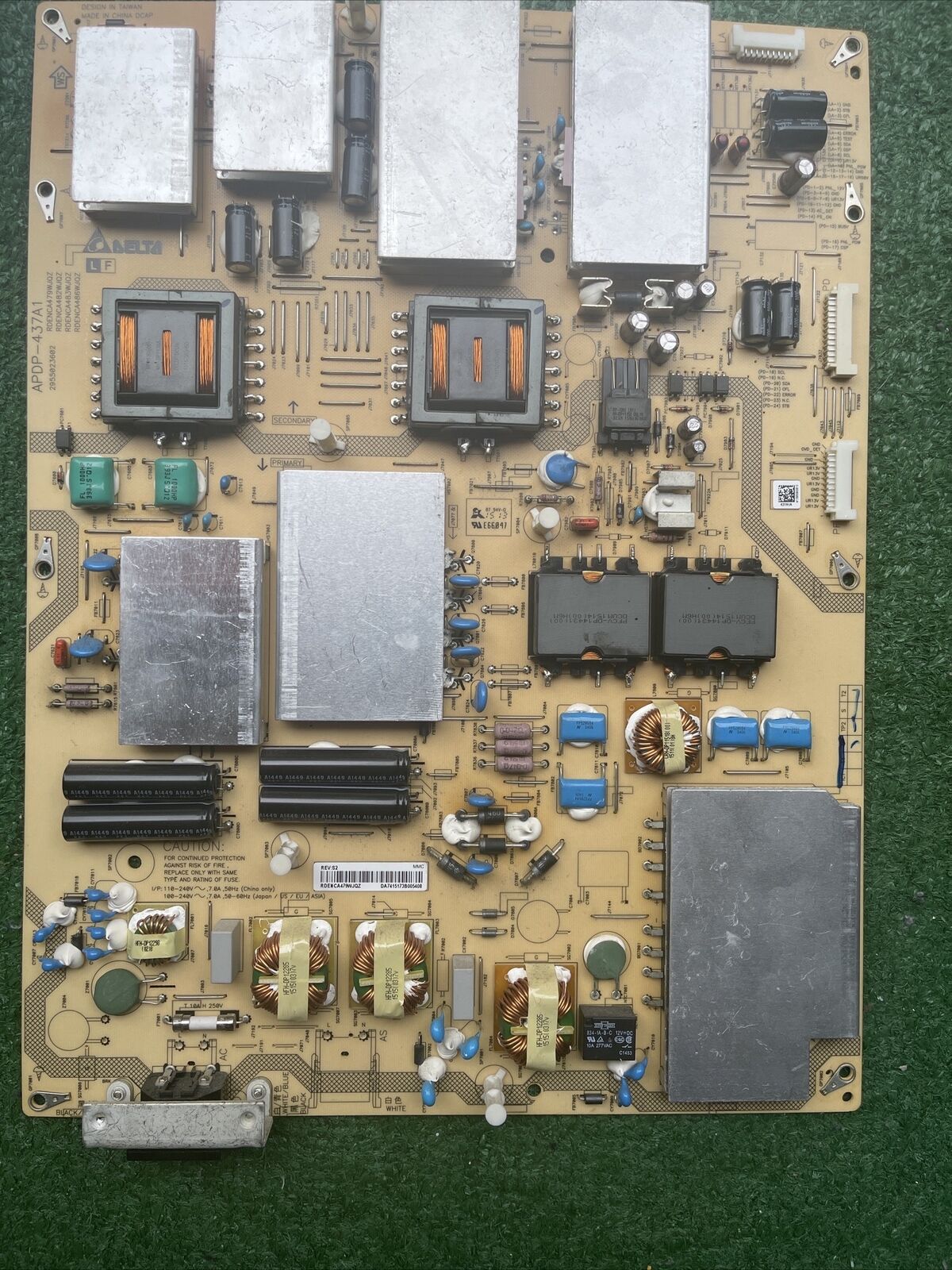
The power supply board from a Sharp Aquos 80″ LCD TV

Now it would be nice if sets had schematics and / or block diagrams inside the case. I remember the days of such documentation included in the back of major appliances. But no more. And with the modularity of TV electronics, replacing boards is about all a current TV dealer can do, often resorting to third-party sources, like eBay to obtain them. This appeared to be my fate in repairing this 80″ Sharp, but alas, no power supply board was to be found on eBay or other parts sites that dealt in these units. And of course, the manufacturer, Sharp in this case, will not even sell you the parts or any diagnostic diagrams. That is for an authorized dealer. But what if the authorized dealer can’t order parts either? Well, they are no more able than someone searching on the sites I did.

Realize the original price for this 80″ set was over $2000. Consigning it to a landfill seemed to be a huge waste. It was working well before the failure. What to do??

Almost every power supply in use today is a switched-mode design. The input line voltage is rectified, then fed to a high-frequency oscillator and using ferrite transformers. This AC output is then rectified, cleaned up and regulated to the DC voltages needed. This design removes the need for heavy iron transformers with higher losses to do the same AC to DC conversion but at 60Hz line frequency.

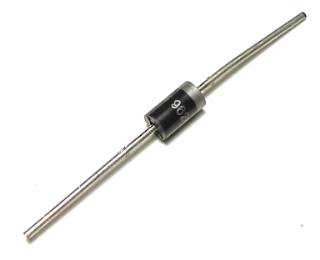
The primary side was working – the high voltage DC was there. But in the secondary side a key component, a 100V 5A diode, was shorted out. This diode is the one that creates the 5V keep alive DC voltage, and twenty cents later and a bit of soldering, the entire power supply was working. The diode? A BR5100 Schottky high-speed power diode, widely available.

So 10 hours later of diagnostic time (I’m ashamed I didn’t find it faster) all back to normal. And a spot in a landfill saved at least for the present!

Finally, here is that 20 cent device! Can you spot it in the upper right section of the power supply???

And don’t forget the tiny picosatellites!

02 Thursday Mar 2023

Posted by Eric Albert in Uncategorized

≈ Leave a comment

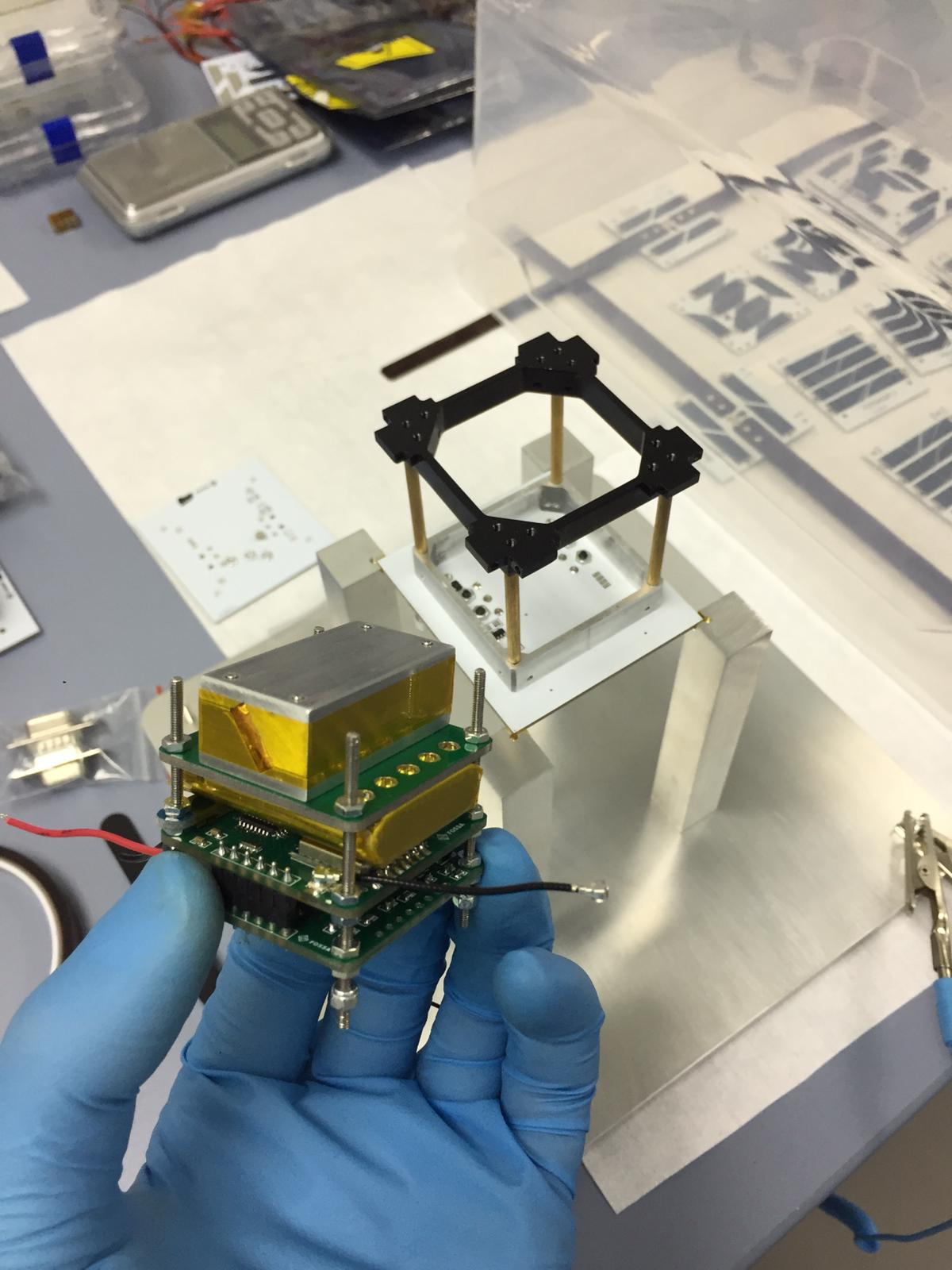
With all of the fuss about the tiny high altitude hobby balloons, you might not know there are also a few low-earth orbit small satellites up there! Yes, these tiny 125 cubic centimeter packages are circling the globe and sending data to ground stations around the world. The map above is a snapshot showing the location of some of these orbiters (blue satellites) and the location of active ground stations (green antennas) that receive them. Each ground station uploads data through the internet to a central site which collects the reports and shows them on the map.

There are a lot of useful scientific experiments although the original intent was to create a “poor man’s SpaceX internet.” This hasn’t happened yet, but this has not been around all that long for a complete system to take shape.

These devices use low power spread spectrum, or LoRa communication modes to achieve downlinks that work well with small inexpensive ground stations. Indeed, a complete ground station costs under $40 if you have to start from nothing. Which is rather amazing given what you’d have needed just a decade ago.

Constructing and getting a picosatellite into orbit is a bit more expensive compared to the cost of launching a high-altitude balloon of the sort ham radio operators do. Thus these are frequently the domain of college/university groups and other space research outfits. The first one launched using this model was in 2021. This was FossaSat-1- the next advancement in picosatellite technology, sized at only 5x5x5cm and weighing only 250g. It is inactive as of March 2023.

Don’t burst my balloon!

26 Sunday Feb 2023

Posted by Eric Albert in Uncategorized

≈ Leave a comment

Don’t Shoot!

The recent news of 3 more balloons shot down by US fighter jets has many folks worried about everything from other spying activities to alien invasion.  However, given what I know from the media (which can be unreliable, nevertheless) I have a strong theory about what those 3 balloons most likely were.  And if so, the truth should help you calm down about these incidents, if in fact you were a bit worked up with them.

All 3 balloons fell into a general description that I know as a “radiosonde.”  For many, many years and even now, satellite-based data gathering operations for weather prediction just don’t get the kinds of data you can get from a radiosonde.  In fact, as a youngster in the 60’s,  I often dreamed of one landing near me to recover for “reverse engineering.”  Instead, I bought some off of surplus markets to learn their inner workings!

So what is a radiosonde?  It is a small electronics package designed to receive GPS location information and at the same time measure temperature, barometric pressure and humidity (in the most common scenario). In turn, it relays that information to ground stations via a small transmitter.  Battery operated, they have a finite lifetime in use of a few hours. There are no cameras or video downlinks – just the data mentioned above. Wind speeds are reflected in positional changes. These are launched with balloons filled with helium such that they reach a maximum altitude and burst, leaving the small electronics package to plummet back to earth.
And who exactly sends these out?  There is really quite a mix of folks who do.  And as long as they are following established FAA rules, there is no need involve things such as permits or licenses.  These are typically less than 4 pounds, often much less.  The National Weather Service sends these up every day from different locations around the US.  Universities do, private research firms do and so do Amateur Radio enthusiasts around the world.  Some years ago at the college where I taught the Plastics Department crafted the high altitude balloon and the Electronics Department made a suitable tracking payload.  At least 2 were recovered – one in northern New Jersey.  Most of the others flew out to the Atlantic and were lost in the “soup.”  Every day, dozens of these are released all over the world.

If you don’t conclude from this description that these devices are harmless “robots” directed by the upper atmosphere winds, then I haven’t done my job well enough. I’d encourage you to do some net searches and see what is out there on the radiosonde topic!

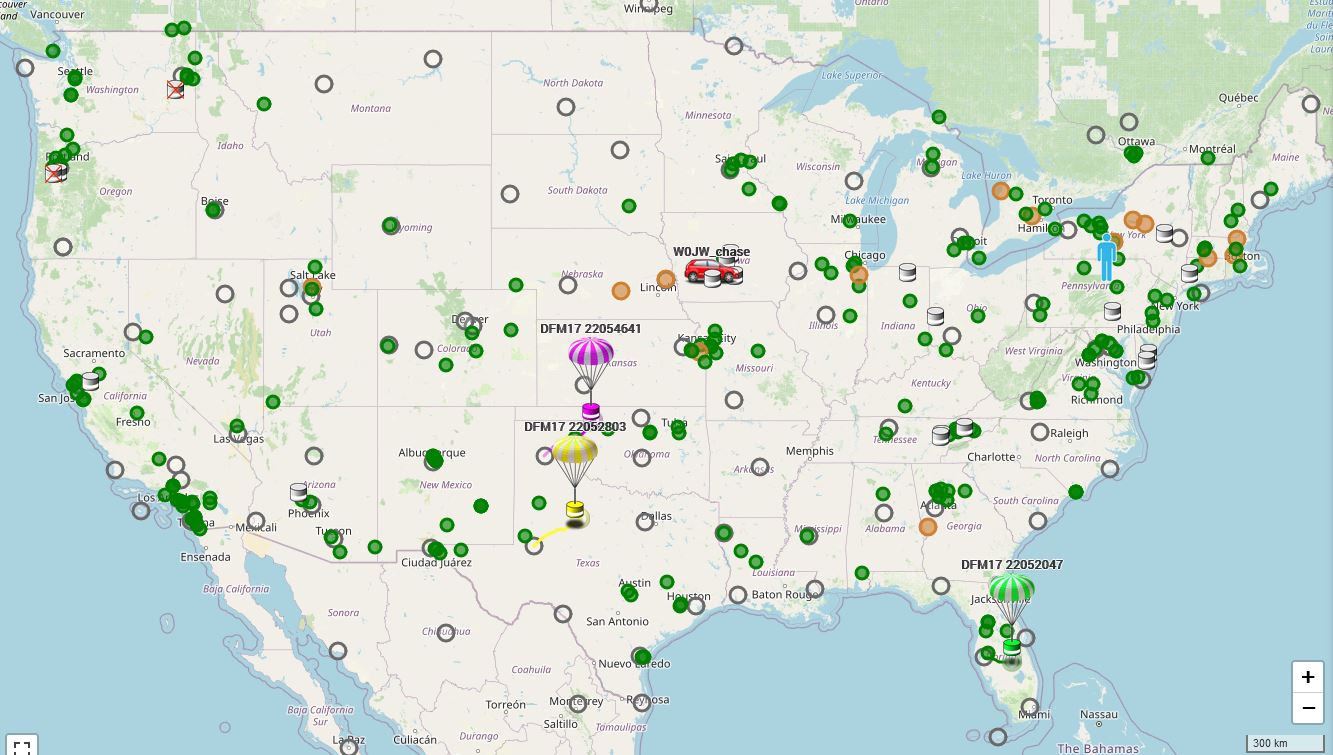
Can you see what is up there in real time?  Indeed you can!  I took a snapshot of a reporting page from sondehub.org as I was writing this blog entry on a Sunday afternoon.  Here is what I found:

There is a lot of detail on the map, and I encourage you to go to sondehub.org and get a map of your current area.  The map is interactive, and the legends are well-explained.  So long as the radiosonde is programmed to send its information on certain common reporting frequencies, ground stations (often radio amateurs!) report those received via internet to sondehub.org, and they in turn create a realtime map with location data and other information about the devices aloft.  There is also a special version of the site that only reports amateur radio balloon beacons, https://amateur.sondehub.org

I’d be remiss if I didn’t add some additional detail about those sent up by the Amateur Radio folks (and also, other technology-based clubs out there, more on that later).  Nothing says you can’t have a solar cell array to power your device.  The main limitation is weight (4 pounds), so radiosondes sent in this small category are not going to be physically huge or pose a threat to the ground.  The pico-balloons of radio amateurs are barely over a few ounces. Yet these humble payloads can traverse the entire globe so long as they remain intact.  These might have been the types that China claimed flew over them!  Once released, these small devices are entirely at the whim of the winds. Indeed, after being blown up by an AIM-9X missile, there was nothing to recover!

Launching high-altitude, circumnavigational pico balloons has emerged only within the past decade. They are designed to be neutrally buoyant at around 43,000 feet. An 11-gram tracker on a tether, along with HF and VHF/UHF antennas to update their positions to ham radio receivers around the world. At any given moment, several dozen such balloons are aloft, with some circling the globe several times before they malfunction or fail for other reasons. The launch teams seldom recover their balloons.

Recently NPR published an article on the Alaska balloon, and you can read it here: https://www.npr.org/2023/02/18/1158048921/pico-balloon-k9yo  This was a balloon created by amateur radio hobbyists for their own learning and research purposes, and was launched under clear FAA rules for such projects.  If you really want to get into the “nuts and bolts” this site has kits ready to go for enthusiasts to purchase!   https://www.picoballoons.net/

Other balloons are sent aloft to test spacecraft components and physics experiments: https://www.npr.org/2023/02/21/1158303780/when-research-balloons-shot-down-scientists-worry

Yes, a payload that fails or doesn’t report through the standard means could pose some risk.  But if NORAD simply got a spare computer to put sondehub.org up for monitoring, we might save some stress on aircraft and early warning systems.

Methinks a half-million dollar missile to down a $100 harmless balloon seems like an overreaction, if not a waste!

Formlabs $500 discount referral link

01 Wednesday Jun 2022

Posted by Eric Albert in Uncategorized

≈ Leave a comment

Tags

discount code, formalbs discount

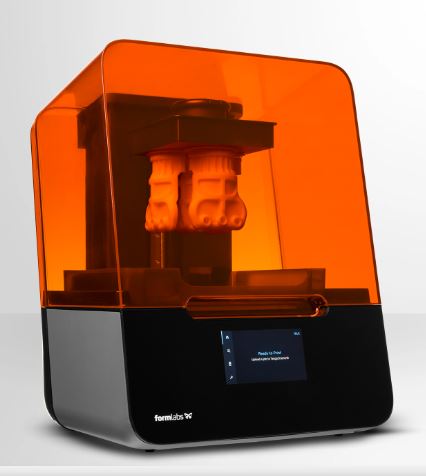
The FormLabs referral program continues – and to get a $500 discount (with terms and conditions) follow this link: https://checkout.formlabs.com/us_en/customer/account/create/?awraf=61BC56BC62979C35E349E

Some folks try to sell these discount codes on ebay but I’m more than willing to offer it for free here on my website!

Note too that there are only 10 coupons available, so I’ll have to remove this post once they are gone.form3

What is ahead for 2022?

09 Sunday Jan 2022

Posted by Eric Albert in Uncategorized

≈ Leave a comment

Now that is a loaded question! The end of the COVID thing? Self-driving cars that actually work? A $20,000 electric vehicle with 450 mile range? [I’d go for a Mr. Fusion like Doc in Back to the Future]

Mr. Fusion? Compact Fusion Reactor Will be Available in 5 ...

No doubt 2022 will continue to bring some new innovations to meet the challenges of these days. How about the focus of much of this blog: Additive Manufacturing?

I suspect that 2022 will be more incremental improvements, especially in novel materials. I don’t expect a $500 3D metal printer for home use, but I do expect that prices of 3D metal printing will continue to become more affordable from vendors such as Shapeways and Xometry. New novel polymeric materials could also be an important aspect of even home-based equipment.

Anyway, I’d suggest looking past the news of pandemic problems to stories of problems solved in 2022!

A bit of topical diversion and a surprise delivery

22 Tuesday Jun 2021

Posted by Eric Albert in Uncategorized

≈ Leave a comment

So this is not additive manufacturing per se, although it was used to prototype the device early on by the developers.

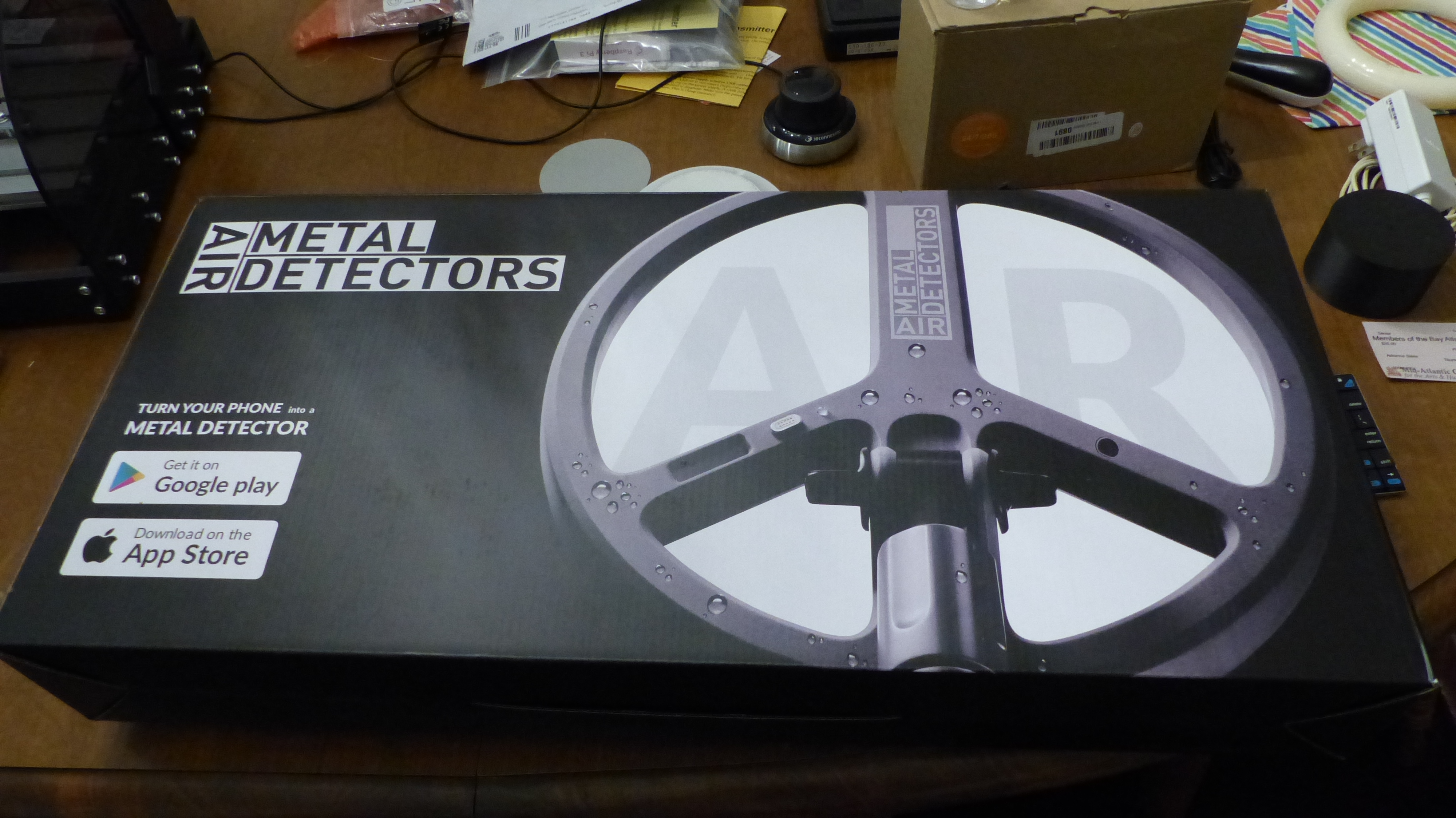
In 2018 I backed a project on Kickstarter for a metal detector that showed a lot of promise – Air Metal Detector – which used a smartphone app to run the system through a Bluetooth connection. The basic idea was to reduce the cost to just the active components in the coil and support structure while providing the option for more sophistication with the application. OTA updates of application and embedded coil software would permit fixes and improvements. Along with this was the potential to reduce weight but the final weight of course depends on the choice of phone. Promised delivery was for November 2019.

Air Metal Detector (from Kickstarter page: https://www.kickstarter.com/projects/airmetaldetectors/air-metal-detector-the-smart-bluetooth-metal-detec/description)
Air MD application as shown on Kickstarter project page

Fast forward to June 2021 – just as I was going on our first out-of-town vacation to a New Jersey beach resort, I got an email from FedEx stating that a package was being delivered the following day that required a direct signature. Thankfully FedEx now has package hold options at DollarGeneral stores, so I picked the one that was going to be on my return trip path home! But the sender listed made no sense to me and I had no direct notice that this was going to be the long awaited Air MD unit, though some weeks earlier I got a request to confirm my shipping address from the project.

In going back to the Kickstarter project page I soon realized I was in a very unique position at least for now – apparently I’m one of 3 or 4 to receive this out of 299 or so folks who pledged for it. Thus this hasty post (with more details to come) to prove I’m not making this up!

As received package.
The detector with phone mount installed and fully collapsed shafts.
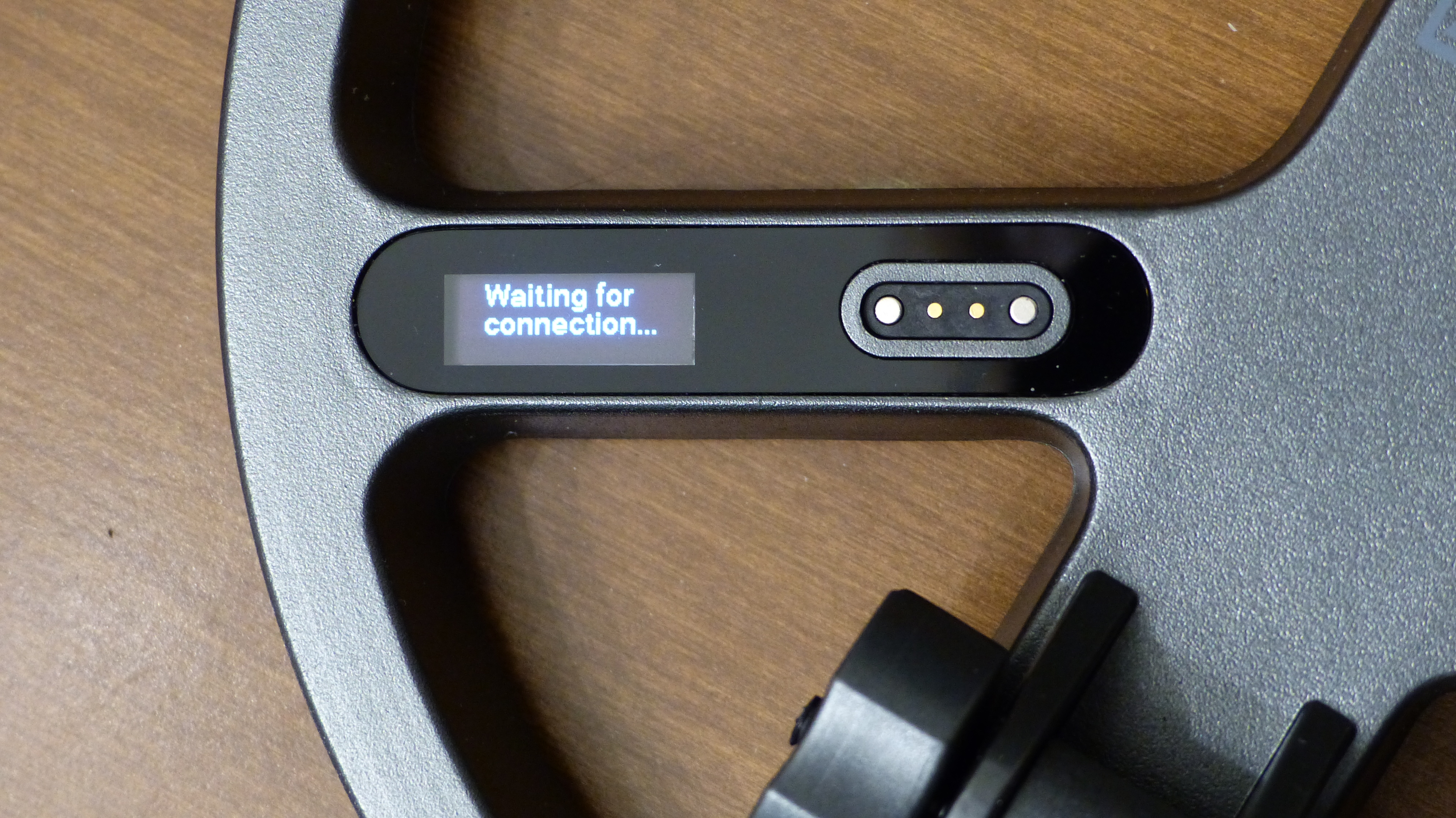
OLED screen after power up and charging port.

It did connect to the app on my iPhone and a quick test with a 25c piece worked as expected, but this is just a quick “all systems go” outcome. I’ll be working on more extensive tests and collecting some user experiences to share in the next day or so. If you have questions you’d like answered in all that, leave it in the comments. Two quick things from me already – the charging port is magnetic like Apple products and is unprotected from the elements. And there is no changing out an eventually defective battery – the head is sealed to IP65 standards they say, and I see no way to service anything inside.

Stay tuned for updates! I plan on comparing this to a Nokta Makro Simplex, which is my current favorite detector.

A bit of an update – I was waiting for the Android app to become available as it was not on the Play store or downloadable through their web site. But I continued to check. It did get out recently. I had some connectivity problems with Bluetooth – it would try to connect then shortly lose the connection with a cryptic error message. This did not happen on my iOS device – an iPhone 5. I am inclined to use the Android option because of a much bigger screen. My first test was on an LG G3 Stylus. However, after trying it on another Android phone I got the same response. The app installed on both Android platforms without any error or warning messages.

Weather here in the last 2 weeks has been lousy and wet, and whenever I’ve had an opening for a test I’ve been discouraged by all that. But I’ve turned on comments for this post, so please suggest things for me to try. I was out to a very rural wooded site using the Nokta Simplex to find old iron pins for a property survey – not exactly treasure hunting, but still valuable to the owner. I found all of them in quick succession, except for one that by rough measurement was under a large snowplow blade! Too much iron for sure.

And one more impression – I had occasion to try some comparisons with my Nokta unit at the end of the summer, in between rain and other chores needed when it wasn’t! If I had to choose one or the other I’d pick the Nokta. Both were pretty reliable in the simple stuff like coins thrown into my yard tests but I found the Air MD unit a bit “fussier.” While I want to do some “calibrated” tests at depth, time for that has eluded me so far. I have not found any of the major commercial vendors of metal detectors selling or reviewing it as of November 2021, but I’ll add any I find here. Plus, sooner or later I’ll probably find a more specific use for testing – or if you are reading this, please suggest one!

COVID-19 and Additive Manufacturing

13 Wednesday May 2020

Posted by Eric Albert in Uncategorized

≈ Leave a comment

Or how my personal additive manufacturing lab was turned into a PPE manufacturing facility.

It was the second week of March 2020 as we closed out the first half of our Spring semester and sent the students home for their traditional week of Spring Break. Lurking already in the background was the spread of the COVID-19 infection. Situated as we are in a largely rural area, such a threat seemed at best a distant problem. But at the end of spring break we extended the students’ return out one more week. And then we were on a permanent hold until May. Maybe we could get in one last week of labs and teaching during our normal finals period, but that was quashed too. Thankfully 93% of our courses were able to complete online, in some fashion or another, but from my own experience not in an ideal manner. But these are not ideal times. And as of this post there are still about 10% of the student body left waiting to know how to complete incomplete Spring semester courses perhaps this summer.

Switching immediately to an online format for a materials science class and a class in additive manufacturing — both with “hands-on” lab components — meant doing some serious modifications. Thankfully I was somewhat already into the technology of video production for teaching. And then the “fun” began.

We do teach our manufacturing students in the 4-year program all sorts of logistics, planning tools, productivity concepts, and more. The strain on the supply chains from panic buying (“where’s the toilet paper??”) honed some of our points often seen as unimportant – but these students were living it. And as for me, seeing the need for personal protective equipment (PPE) was crucial to the safety of healthcare workers and others, the shortages were unacceptable.

So what has been the output? I’ve honestly lost count, but somewhere around 300 face shields, 800 “ear savers” and several hundred other adaptive items (door handle grabbers, key chain sanitizers, cloth mask clips etc.). Among the PPE were some odd items for class. Everything was donated to the recipients – including visiting nurses, nursing homes, dentists, child care centers, etc.

And while it has slowed down, I’m not completely out of the business. I’m sure my work has helped in a small way to contain the spread.

If you’d like to help me pay for my personal materials and wear and tear on my equipment (besides supplies, my MakerBot Replicator+ needed a new extruder and my Flashforge Adventurer crashed a nozzle and build plate) just use the PayPal donation button on the left menu! Even a dollar or two would be a wonderful acknowledgement.

OK, one year later…

23 Thursday Jan 2020

Posted by Eric Albert in Uncategorized

≈ Leave a comment

Talk about being totally distracted! This past year professionally and personally was filled with all sorts of new things. To catch up with everything will be difficult, but from the last post, yes, I did get the new Prusa SL1 last fall (but still under construction, however). Our new college Makerspace is fully up and running, and I’m the faculty-in-residence this year to assist with all sorts of things maker. Because my teaching schedule is now reduced, there is much more time for adding to this blog – hopefully things of value that somebody will tap my “Donate” button! 😉 Feeding me caffeinated drinks is the best way to ensure more technical content here!

What will 2019 Bring?

01 Tuesday Jan 2019

Posted by Eric Albert in Uncategorized

≈ Leave a comment

As is obvious from date of this post and the last one I was not doing much blogging here – and for a good reason.  I was still very immersed in additive manufacturing problems and solutions, but my own personal life was so overloaded with family needs that blogging just didn’t happen.

Well, I hope to fix this several ways.  I have some neat project information to share involving additive manufacturing in the restoration of several antique automobiles.  This will definitely be the year of the liquid SLA printer – just take a look at Josef Prusa’s first UV/LCD unit the SL1:

Expected to be shipped end of January 2019, and yes I do have one on order.  I will also be posting a review of the Anycubic Photon too – it is a very nice unit that works well for me.  And I picked up a used Formlabs Form 1 – main issue dirty mirrors (that seems to be a common issue) and Formlabs nicely sent me a replacement set even though I was able to restore the ones in the unit.   Plus an upgrade to the SparkMaker’s system to increase resolution through a parts kit and a test run of T3D’s phone / tablet unit.  Maybe OLO / ONO (the much late phone based 3D printer) could appear!

I also expect to see some new breakthroughs in scanning.  I’ll be posting a review of Qlone (tablet / phone app) that recently got upgraded to 4K.

And as my college has opened a new Makerspace, I’ll devote one post to showing you how our design team of faculty and students created a unique facililty.

Happy New Year! 😉

← Older posts

Help me keep going in 2023!

Donate Button

Recent Posts

  • A story of “shock induced” instant repair
  • The Right to Repair depends on Parts and Information
  • And don’t forget the tiny picosatellites!
  • Don’t burst my balloon!
  • Formlabs $500 discount referral link

Archives

  • August 2024
  • September 2023
  • March 2023
  • February 2023
  • June 2022
  • February 2022
  • January 2022
  • June 2021
  • May 2020
  • January 2020
  • January 2019
  • July 2017
  • April 2017
  • January 2017
  • October 2016
  • March 2016
  • December 2015
  • October 2015
  • September 2015
  • April 2015
  • January 2015
  • December 2014
  • November 2014
  • October 2014
  • September 2014
  • June 2014
  • April 2014
  • March 2014
  • September 2013
  • June 2013
  • February 2013
  • September 2012
  • July 2012
  • June 2012
  • May 2012
  • March 2012
  • December 2011
  • November 2011

Categories

  • Adventures with a Solidoodle
  • Building the Sumpod
  • General Technology
  • Personal 3D Printers
  • Uncategorized

Meta

  • Create account
  • Log in
  • Entries feed
  • Comments feed
  • WordPress.com

Recent Posts

  • A story of “shock induced” instant repair
  • The Right to Repair depends on Parts and Information
  • And don’t forget the tiny picosatellites!
  • Don’t burst my balloon!
  • Formlabs $500 discount referral link

Archives

  • August 2024
  • September 2023
  • March 2023
  • February 2023
  • June 2022
  • February 2022
  • January 2022
  • June 2021
  • May 2020
  • January 2020
  • January 2019
  • July 2017
  • April 2017
  • January 2017
  • October 2016
  • March 2016
  • December 2015
  • October 2015
  • September 2015
  • April 2015
  • January 2015
  • December 2014
  • November 2014
  • October 2014
  • September 2014
  • June 2014
  • April 2014
  • March 2014
  • September 2013
  • June 2013
  • February 2013
  • September 2012
  • July 2012
  • June 2012
  • May 2012
  • March 2012
  • December 2011
  • November 2011

Categories

  • Adventures with a Solidoodle
  • Building the Sumpod
  • General Technology
  • Personal 3D Printers
  • Uncategorized

Meta

  • Create account
  • Log in
  • Entries feed
  • Comments feed
  • WordPress.com

Blog at WordPress.com.

  • Subscribe Subscribed
    • Renaissance Engineer
    • Already have a WordPress.com account? Log in now.
    • Renaissance Engineer
    • Subscribe Subscribed
    • Sign up
    • Log in
    • Report this content
    • View site in Reader
    • Manage subscriptions
    • Collapse this bar
 

Loading Comments...
 

You must be logged in to post a comment.